.png)
Unrivaled Teamwear uses AI to unlock infinite creative variety in concept and marketing imagery


.png)
Background
Unrivaled Teamwear is a multi-brand sports apparel company and the parent organization of Gear for Sports and Knights Apparel. Unrivaled Teamwear manages design, merchandising, and production workflows across a wide portfolio of licensed programs — including Under Armour, Reebok and Champion at retailers like Fanatics, Target and Walmart among others. They also have distribution in collegiate, resort, and green grass golf markets.
The scale and complexity of their operation is significant: multiple brands, multiple retail partners, seasonal production cycles running simultaneously, and a constant need for high-quality visual assets to support internal review, buyer presentations, catalog and web image production.
The Challenge
For a company operating at Unrivaled's scale, the traditional visual production model wasn't just slow, it was a strategic constraint. Producing the assets needed to move programs forward meant spending significant time scheduling photoshoots, casting talent, and waiting on physical samples. Industry standard calls for six to ten shoots per year, and with every brand running its own calendar, the costs and delays compounded fast.
Three challenges were holding the team back:
- Early-stage alignment: Because visuals were only available late in the production cycle, design, merchandising, and buyer teams had limited ability to align before key decisions were already locked in.
- High cost of iteration: Any revision risked a ripple effect — from delayed samples to compromised photo shoot schedules.
- Scale without leverage: As the brand portfolio grew, the photoshoot model scaled linearly with it. More brands, more programs, and more retail partners meant more shoots with no way to work smarter, only harder.
The ability to quickly generate and refine high-quality imagery has elevated the storytelling behind our products while giving our teams more flexibility and creative freedom. Raspberry AI has become an important tool in helping us work smarter, move faster, and deliver stronger visual experiences.
— Richard Keairnes, Sr Creative Manager
How Unrivaled Teamwear's Design and Merchandising Teams Scaled Visual Production Across an Entire Brand Portfolio
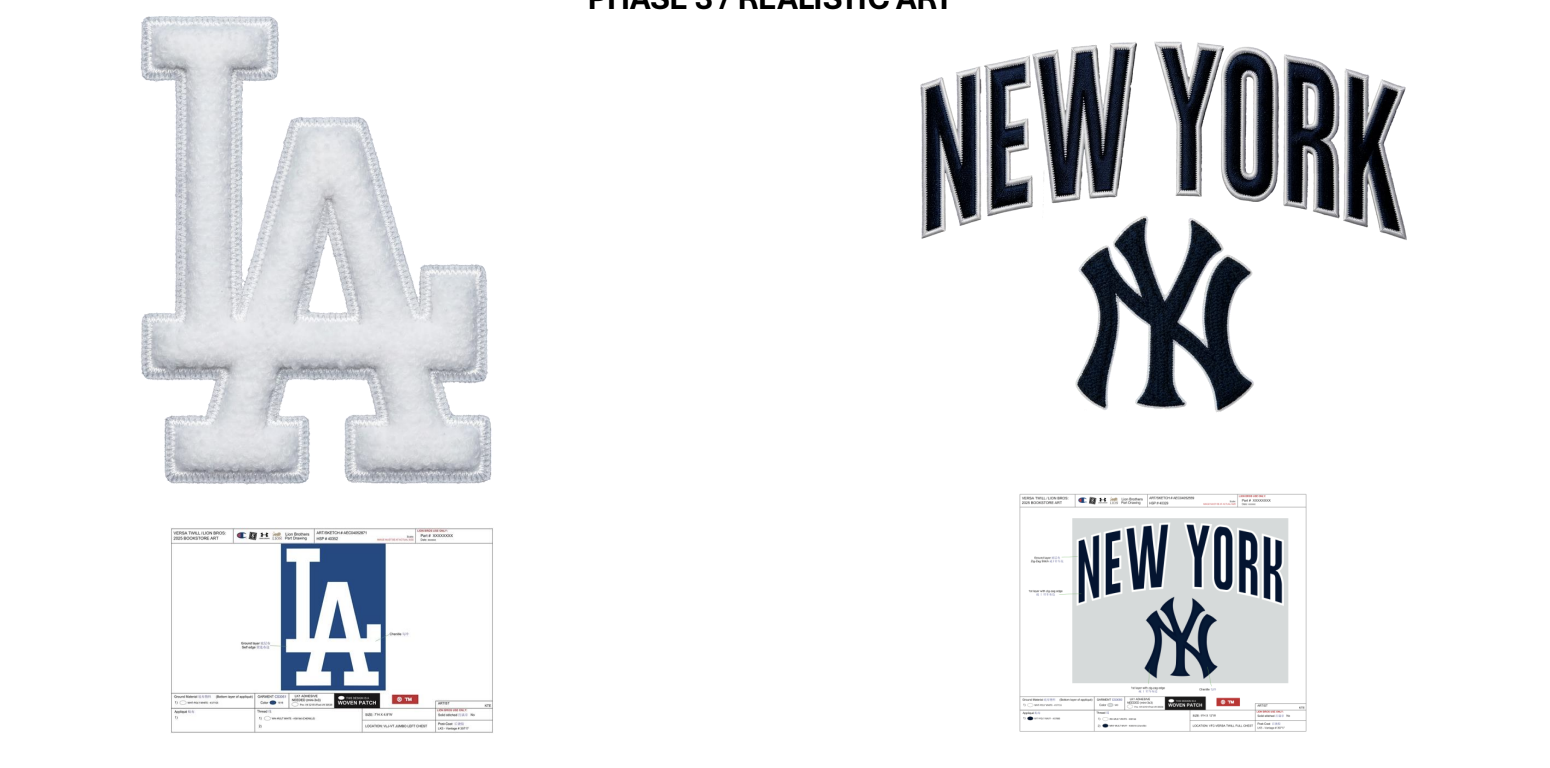
By 2026, Unrivaled Teamwear was managing one of the most complex licensed brand portfolios in the teamwear industry with multiple brands, dozens of retail partners, and seasonal programs running simultaneously across diverse demographics. The team was good at what they did. But the production model they relied on was built for a different scale. With photoshoot costs and timelines compounding across every brand and every season, the team began to explore ways to boost efficiency and streamline processes.
The answer came through a trusted source. A fellow licensed brand partner with similarly demanding visual production requirements, had already started using Raspberry AI and passed along the recommendation. Unrivaled wasn't just looking to experiment; they were looking for a solution that had already proven itself at the level they operate.
Integrating AI into Existing Design Workflows
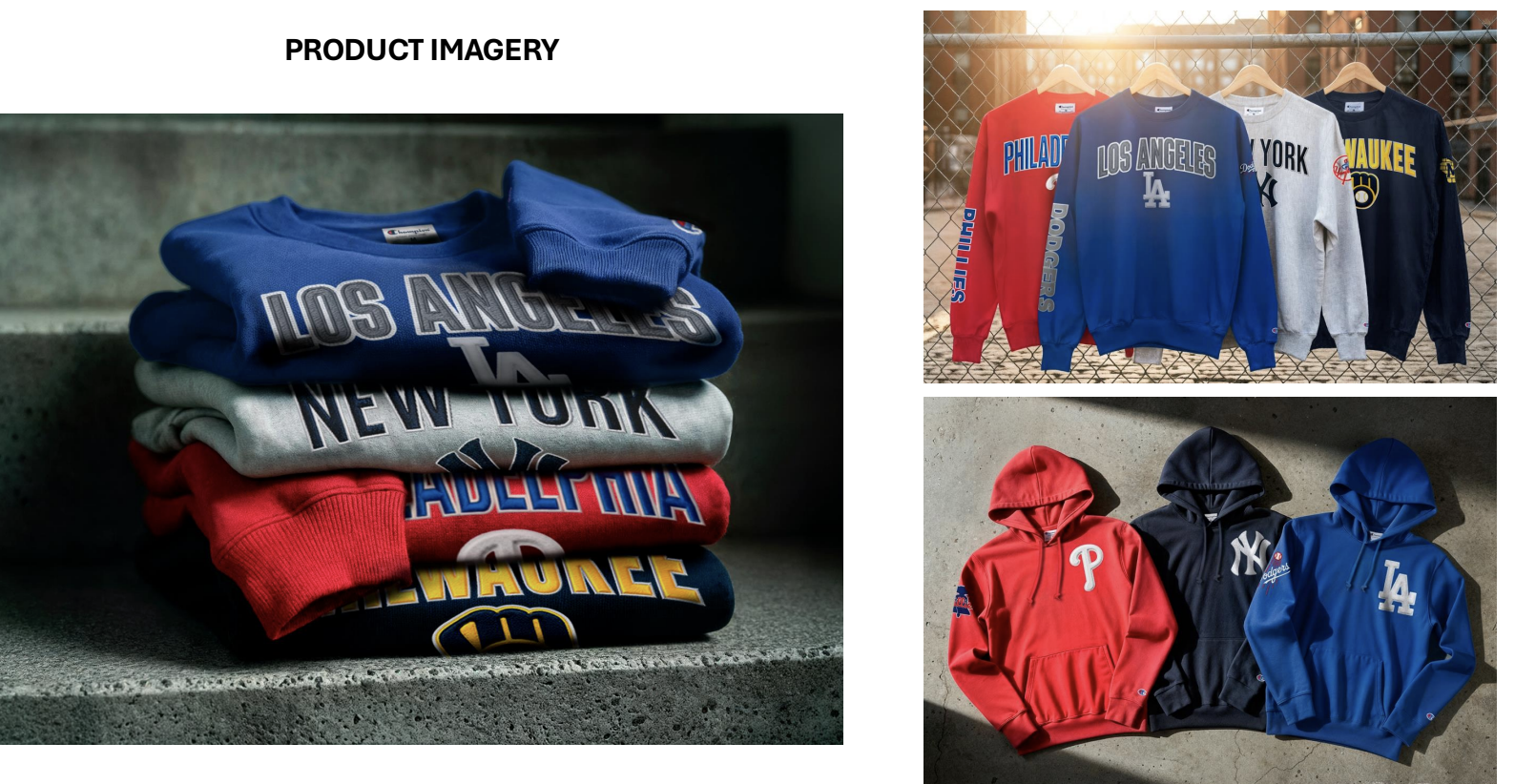
Rather than adopting Raspberry AI as a point solution, Unrivaled's team made a foundational investment from the start: building a comprehensive, brand-specific model library that would serve as the infrastructure for everything that followed.
The team developed an extensive AI avatar model library. The AI models were tailored to the specific demographics each brand serves and spans multiple genders, ages, and body types. The team strategically approached brand-specific fit expression and on-body rendering standards. Huge emphasis was placed on utilizing new and existing tools to accurately render styles, materials, and embellishment. The visual quality needs of partners and customers have been encapsulated in the build out.
With that foundation in place, both the design and merchandising teams adopted a shared set of workflows with the intent of flowing front end visuals to back end go-to-market imagery. The workflows included:
- Colorway editing and variation generation at scale for rapid exploration.
- On-body and multi-view rendering using the brand-specific model library to deliver consistent, retail-ready visuals across every program.
- Lifestyle photography generation to produce aspirational, in-context imagery without a full production shoot.
- Sketch to Render for early-stage concepting — bringing ideas to life visually before any physical sample existed.
- Batch generation to accelerate asset production across large style counts and seasonal programs.
The Results

- A cross-functional, multi-disciplinary structure allowed the team to engineer a seamless workflow from brief to final output.
- Able to generate multiple catalogs without a photo shoot
- The extra time and savings have allowed the team to take on more workload than expected, which has been a critical win as our business rapidly expands
Catalog Delivered On-time, No Photoshoot Required
The Spring '27 catalog was one of the clearest proofs of what this new model makes possible. The team produced every visual asset needed for print on-time and press ready.
The cost and time savings impact was immediate. Time spent scouting and scheduling models and locations was directed into the creative build. While the AI itself has a cost impact, they were able to repurpose part of the existing marketing budget to cover the licensing.
Using AI to Raise the Bar on a High-Stakes Retail Program
The next test was a more demanding - a high-volume program with significant production requirements at a major retail partner with exacting visual standards. Using Raspberry AI, the team developed assets that showcased garments across the right demographics at a quality level that met the partner's visual bar.
Early renders received strong internal feedback. The render quality reached a threshold where the team has been able to reduce the need for photoshoots. That shift represents a meaningful change in how a major retail program is produced and what it costs.
A Platform Built for Portfolio Scale
The impact isn't limited to a single catalog or program and Unrivaled is actively leveraging this advantage across its portfolio.
The adoption numbers tell the same story. Within one quarter, the platform expanded from the design team to the merchandising team. A third user base expansion and roll-out is kicking off. Users are deeply engaged, working across an average of five distinct tools per person and logging 800+ hours of design work in the platform in a single month
.pdf.png)
Takeaway
Unrivaled didn't adopt Raspberry AI as an experiment. They built infrastructure, trained the platform to their standards, and embedded it into the workflows that matter most, from early-stage concepting to final image delivery. There were four key pillars to their success:
- Infrastructure first: Investing in a brand-specific model library before scaling workflows gave the team a foundation that compounds in value with every program they run.
- Earlier visualization: When teams can show what a garment looks like before samples exist, alignment happens sooner and buyers stay engaged longer.
- Create workflows built to scale: By replacing shoot-dependent workflows with render-based production, the team built a system that scales with the business. Integrating the technology from concept to marketing allows the team to extract maximum value from early design outputs, putting initial renders to work across customer presentations, merchandising tools, and marketing assets.
- They championed the platform across their own organization: Once the design team saw real value from Raspberry, they advocated for it to the merchandising team themselves. That internal championship is what drove cross-functional adoption in a single quarter and ultimately faster ROI.
The result is a design and merchandising operation that can move at the speed of their business, across every brand, every season, and every retail partner they serve.
Ready to cut costs and accelerate your production lifecycle? Book a demo here.
TECH-TEXT
Heading 2
Heading 3
Heading 4
Heading 5
Heading 6
Lorem ipsum dolor sit amet, consectetur adipiscing elit, sed do eiusmod tempor incididunt ut labore et dolore magna aliqua. Ut enim ad minim veniam, quis nostrud exercitation ullamco laboris nisi ut aliquip ex ea commodo consequat. Duis aute irure dolor in reprehenderit in voluptate velit esse cillum dolore eu fugiat nulla pariatur.
[[- Mattia Giorgi, Head of AI & Innovation] cs-quote-desk]
“With our old processes, it was hard to show what we were doing. It was time-consuming, costly, and not everyone had the time or skill to adopt traditional tools effectively.”
[[- Mattia Giorgi, Head of AI & Innovation] cs-quote-desk]
Ordered list
- Item 1
- Item 2
- Item 3
Unordered list
- Item A
- Item B
- Item C
Bold text
Emphasis
Superscript
Subscript
More Case Studies