
Istituto Secoli’s AI-powered fashion curriculum helps students ideate faster, experiment confidently, and present professionally


Background
Founded in 1934 as the first fashion academy in Italy, Istituto Secoli has trained four generations of fashion makers across the full creative and production pipeline — from design and patternmaking to prototyping, garment construction, and complete collection development. The institute is recognized by the Italian Ministry of University and Research as an AFAM institution, offering first-level three-year degrees in Fashion Design and Fashion Product Technologies.
Secoli’s curriculum is intentionally industry-mirrored: students move through the entire production chain in practical, professional projects designed to replicate the workflow of fashion companies. This model blends rigorous technical method with creative exploration, ensuring graduates are both craft-grounded and future-ready.
Interdisciplinary collaboration is also central to Secoli’s identity. Projects encourage cross-pollination between art, design, and fashion, creating an open dialogue that leads to thoughtfully designed, meticulously crafted outcomes — a balance of tradition and innovation that defines the Secoli approach.
The Challenge
Even with a strong hybrid curriculum, Secoli saw opportunities to modernize early-stage digital design and make advanced 3D work more accessible:
“Our hybrid approach ensures graduates have artisanal competencies and technological abilities — but we wanted a tool that could accelerate creativity while staying aligned with the industry’s future.”
[[- Istituto Secoli] cs-quote-desk]
Traditional 3D software can slow ideation and create steep learning curves, limiting how quickly students can explore ideas.
Students had experimented with generative AI for inspiration and research, but tools weren’t consistently integrated into a guided design process.
Secoli wanted a classroom-ready solution that aligned with industry shifts toward AI, 3D, and sustainability — without replacing craftsmanship.
The Raspberry Difference
Raspberry stood out because it removes friction from advanced digital design while keeping creativity in the driver’s seat.
What made Raspberry a fit for Secoli:
- Accessible, intuitive 3D + AI: Students can focus on stylistic exploration instead of wrestling with technical barriers.
- Faster, more flexible ideation: Raspberry makes advanced digital fashion design quicker to prototype and easier to iterate.
- Complements—not replaces—existing methods: Faculty viewed Raspberry as an additive tool that modernizes workflow while preserving expressive freedom.
- Progressive rollout for real adoption: Raspberry was easy to integrate into second-year Fashion Design courses through a phased approach that ensured instructor training and student success.
“We recognized Raspberry as a tool that synergistically integrates Artificial Intelligence with design. We viewed it not as a replacement, but as a valuable additional tool to complement our programs.”
[[- Istituto Secoli] cs-quote-desk]
The Results
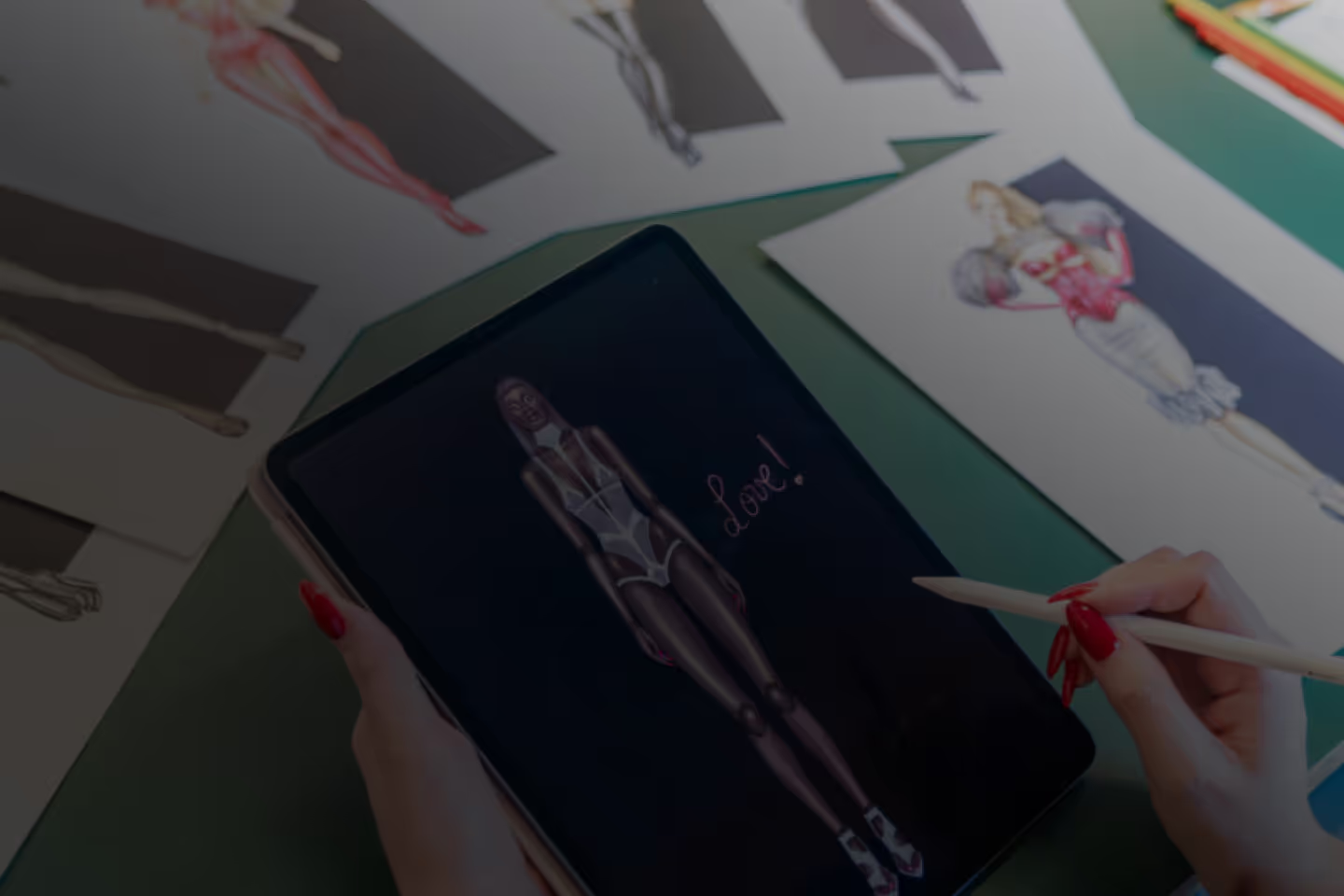
Raspberry is now embedded into Secoli’s three-year Fashion Design classes and used freely by students, unlocking faster experimentation and more ambitious outcomes.
Key results observed:
- Accelerated iteration and digital prototyping: Students move through visual testing and refinement significantly faster.
- Greater creative range: The tool enables exploration of styles and concepts previously considered too complex or time-consuming.
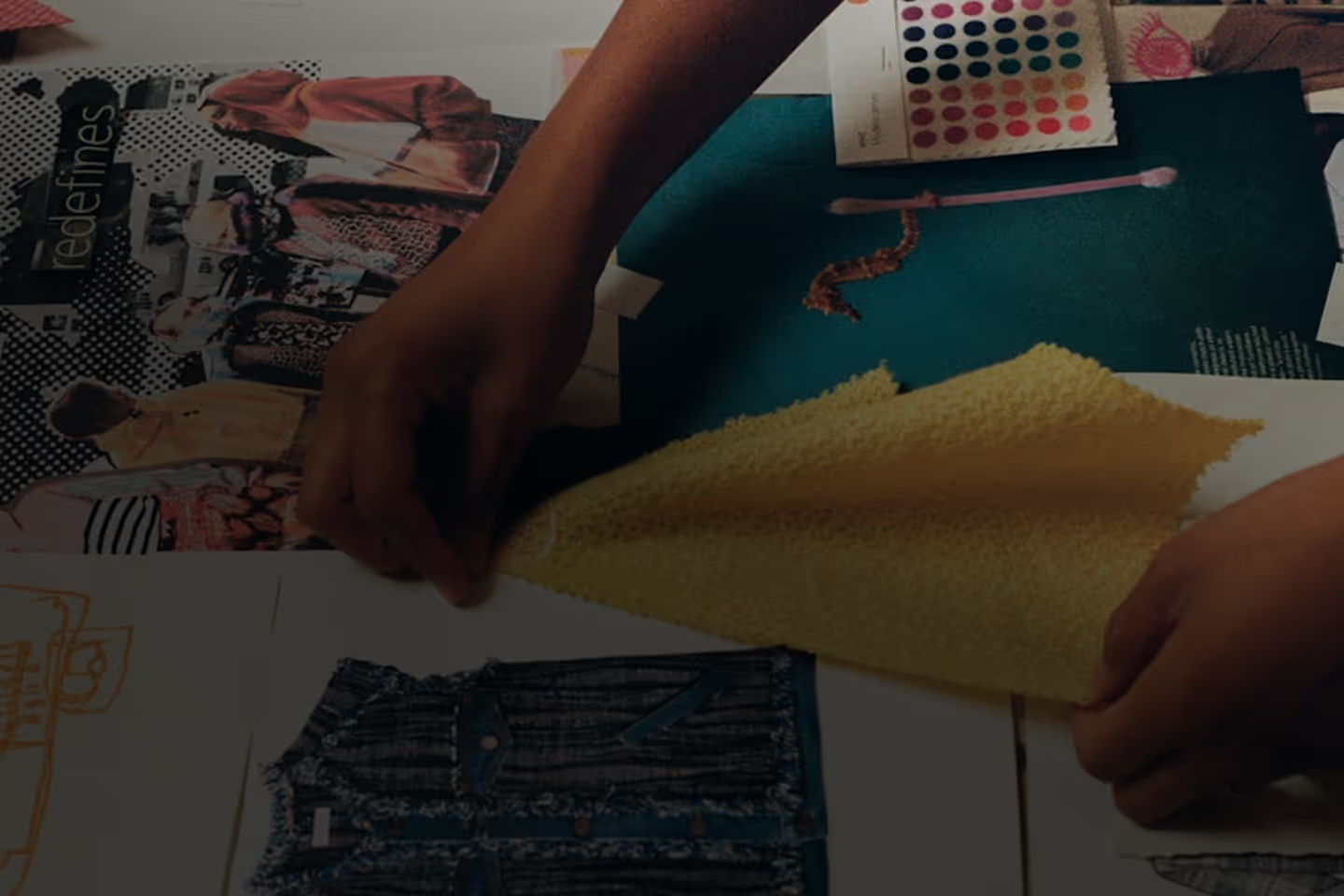
- Higher-quality textile realism: Students faithfully render fabric textures through prompting and hyper-realistic environments.
- Reduced overall design time: Secoli has already seen clearer speed gains in testing and concept development.
“Raspberry’s potential lies in accelerating the process of iteration and digital prototyping. We’ve clearly observed faster testing processes and a reduction in overall design time.”
[[- Istituto Secoli] cs-quote-desk]
Takeaway
Secoli believes fashion’s future will be shaped by environmental responsibility and digital transformation. AI and 3D tools like Raspberry are becoming standard for prototyping and sampling, reducing the need for unnecessary physical garments and minimizing material waste.
“Artificial Intelligence will assist designers by accelerating creative processes and improving workflow efficiency — while sustainability becomes the defining backbone of the industry.”
[[- Istituto Secoli] cs-quote-desk]
With Raspberry, Istituto Secoli is ensuring that the next generation of designers can honor craftsmanship while fluently designing for the future.
TECH-TEXT
Heading 2
Heading 3
Heading 4
Heading 5
Heading 6
Lorem ipsum dolor sit amet, consectetur adipiscing elit, sed do eiusmod tempor incididunt ut labore et dolore magna aliqua. Ut enim ad minim veniam, quis nostrud exercitation ullamco laboris nisi ut aliquip ex ea commodo consequat. Duis aute irure dolor in reprehenderit in voluptate velit esse cillum dolore eu fugiat nulla pariatur.
[[- Mattia Giorgi, Head of AI & Innovation] cs-quote-desk]
“With our old processes, it was hard to show what we were doing. It was time-consuming, costly, and not everyone had the time or skill to adopt traditional tools effectively.”
[[- Mattia Giorgi, Head of AI & Innovation] cs-quote-desk]
Ordered list
- Item 1
- Item 2
- Item 3
Unordered list
- Item A
- Item B
- Item C
Bold text
Emphasis
Superscript
Subscript