Accademia di Belle Arti di Macerata’s AI-powered curriculum builds industry-ready fashion designers


Background
Accademia di Belle Arti di Macerata is a public institution with a long artistic tradition. Over decades, it has naturally embraced experimentation and contemporary technologies to support creative education. In its fashion and design programs, the academy balances theory, research, and hands-on practice — while preserving space for personal expression and artistic exploration.
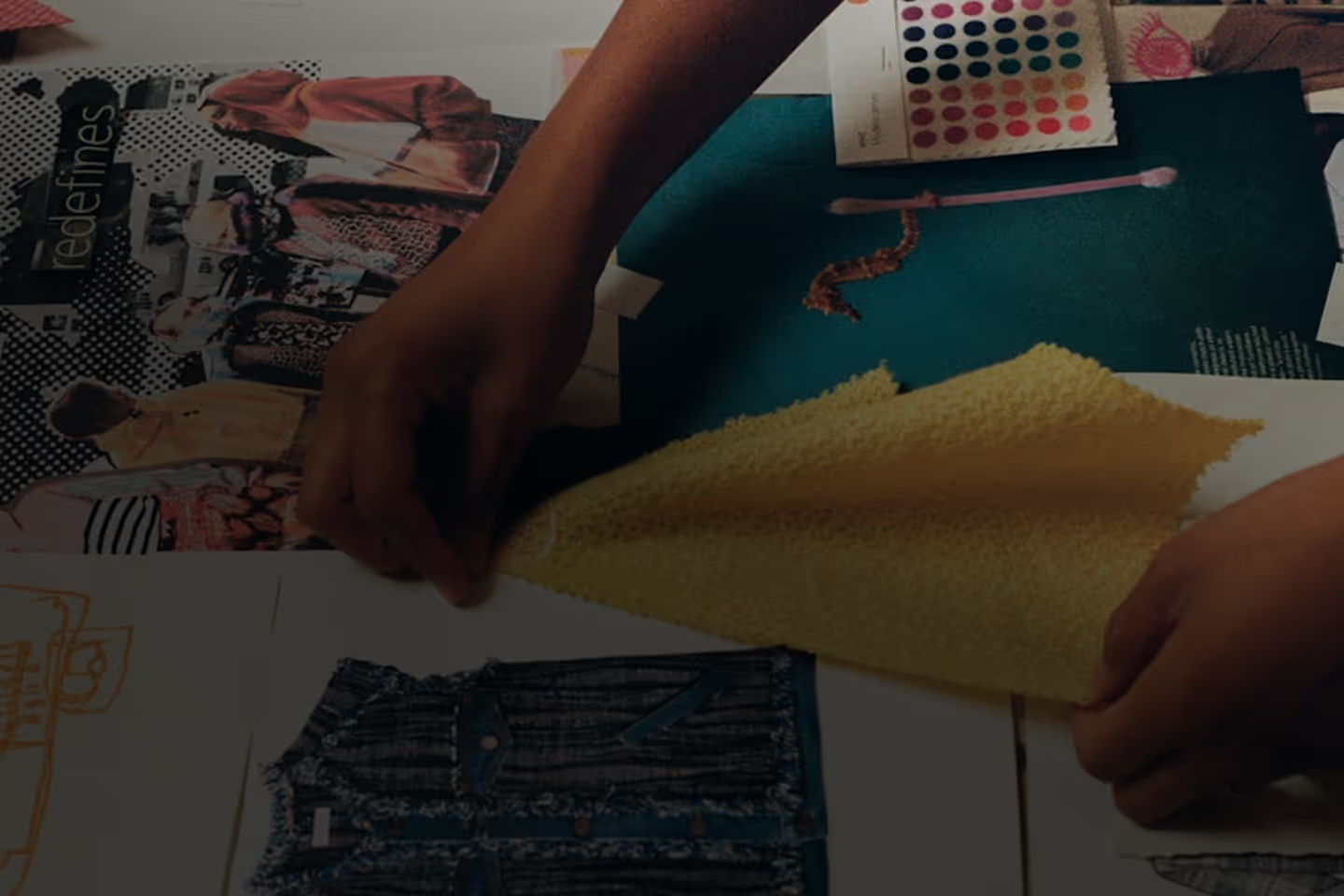
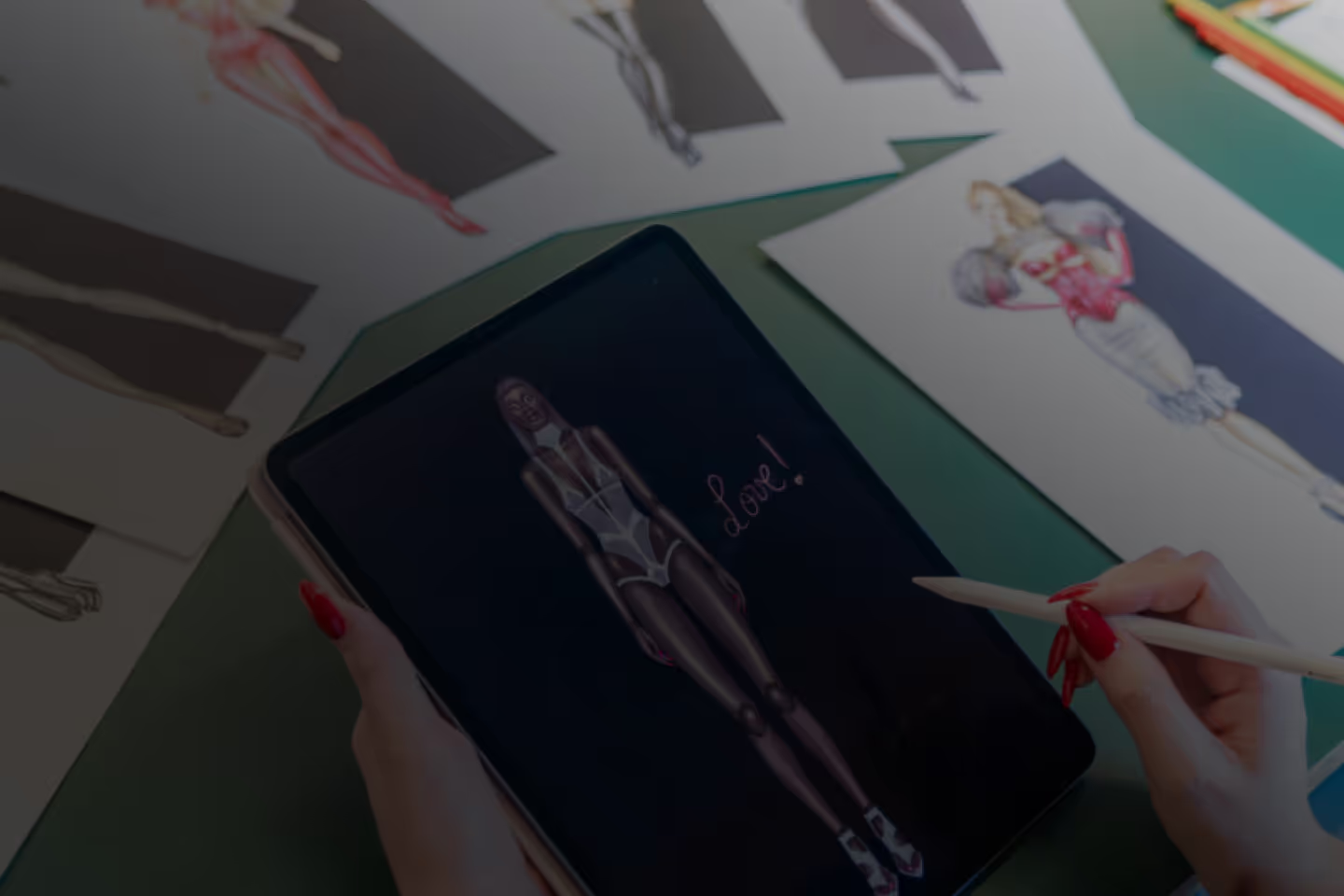
Students regularly develop fashion design projects, visual concepts, material research, and full collection narratives. Coursework blends technical training with moments of open experimentation, and often includes interdisciplinary collaborations that unite fashion, art, and visual storytelling.
The Challenge
Faculty members at Accademia di Belle Arti di Macerata first heard about Raspberry AI through a discussion on innovations in design and fashion. This spurred conversations of exploring the tool to simplify students' work.
Before Raspberry, the academy had faced gaps in speed and structure during early-stage design:
- Slow concept kickoff: the beginning of projects required extensive manual research and many trials, making it hard to translate ideas into images quickly and slowing down fashion courses.
- No consistent AI pathway: AI tools had been used sporadically and individually, but there was no guided, classroom-ready workflow to integrate AI meaningfully into teaching.
- Need for a simple, supportive tool: faculty wanted something that improved ideation without adding complexity to existing creative processes.
“Before introducing Raspberry, the initial phase of projects was considerably slower — lots of manual research, many trials, and difficulty translating ideas into images.”
[[- Accademia di Belle Arti di Macerata] cs-quote-desk]
The Raspberry Difference
Raspberry was introduced to 700 students across visual arts, design, scenography, restoration, and new digital media programs and the realized value was immediate.
What stood out most:
- Instant visualization: students can generate visual directions within minutes, accelerating the first phase of a project.
- Fluid creativity, not automation: Raspberry supports ideation while keeping human taste and intention at the center.
- Industry-aligned learning: students gain familiarity with AI tools already reshaping fashion and design work.
- Easy classroom adoption: Raspberry fit naturally into courses without disrupting workflows.
“It does not replace the creative process — it makes it more fluid. Raspberry immediately appeared to be the easiest and most effective to introduce in the classroom."
[[- Accademia di Belle Arti di Macerata] cs-quote-desk]
The Results
Raspberry quickly became a natural part of fashion design teaching, with clear wins for both students and faculty.
Key outcomes:
- Fast, intuitive onboarding: students found Raspberry easy to understand and useful from the first minutes.
- Moodboards + variations at speed: students can explore multiple stylistic directions early, improving the quality of concept development.
- Unexpected student growth: confidence increases because students can see their ideas immediately, boosting experimentation and independence.
- Higher project quality: richer moodboards, clearer collection stories, refined variations, and more professional presentations.
- More time for deeper design: by shortening ideation, students focus longer on collection development and cohesion.
“Students embraced it naturally. They feel more confident starting a project because they can immediately visualize their ideas.”
[[- Accademia di Belle Arti di Macerata] cs-quote-desk]
Accademia di Belle Arti di Macerata has now incorporated Raspberry AI as a staple in their fashion design courses. Today, the ideation phase has become much faster, allowing students to focus more effectively on the actual development of the collection. The results are more mature and more coherent.
Takeaway
With Raspberry AI, Accademia di Belle Arti di Macerata envisions a future where designers use intelligent tools naturally — enhancing creative expression rather than diminishing it. AI will become a consistent support in the design process, while artistic vision remains at the core.
“Technology will become an increasingly important support, but human sensitivity will remain at the heart of the creative process.”
[[- Accademia di Belle Arti di Macerata] cs-quote-desk]
TECH-TEXT
Heading 2
Heading 3
Heading 4
Heading 5
Heading 6
Lorem ipsum dolor sit amet, consectetur adipiscing elit, sed do eiusmod tempor incididunt ut labore et dolore magna aliqua. Ut enim ad minim veniam, quis nostrud exercitation ullamco laboris nisi ut aliquip ex ea commodo consequat. Duis aute irure dolor in reprehenderit in voluptate velit esse cillum dolore eu fugiat nulla pariatur.
[[- Mattia Giorgi, Head of AI & Innovation] cs-quote-desk]
“With our old processes, it was hard to show what we were doing. It was time-consuming, costly, and not everyone had the time or skill to adopt traditional tools effectively.”
[[- Mattia Giorgi, Head of AI & Innovation] cs-quote-desk]
Ordered list
- Item 1
- Item 2
- Item 3
Unordered list
- Item A
- Item B
- Item C
Bold text
Emphasis
Superscript
Subscript