
How AI-Powered Design Is Solving Fashion's Physical Sampling Problem
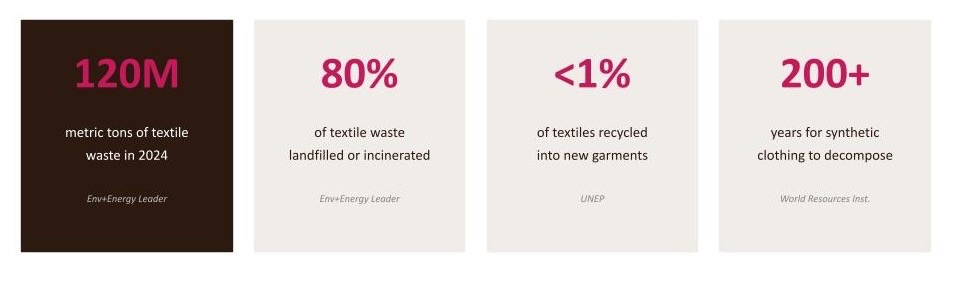
The fashion industry generated 120 million metric tons of textile waste in 2024. 80% of it was landfilled or incinerated. Less than 1% was recycled into new garments. And synthetic clothing, once discarded, can take over 200 years to decompose.
These numbers are staggering. A significant and largely overlooked driver of this crisis isn't overproduction at the retail end. It starts much earlier, in the design room, before a single garment ever reaches a consumer.
The Hidden Cost of Physical Sampling
Every season, brands produce 15 to 25 physical samples per style. Of those, 60% are rejected and thrown away. A 30-style collection generates between 270 and 450 wasted garments used for review meetings. Then the cycle repeats, typically two to four rounds before production is approved. Each sample ships internationally, multiple times. And 15% of the fabric used in cutting is wasted before a sample is even finished.
Pre-production sampling creates garments made only to be discarded. It is a direct, measurable, and avoidable contributor to the global textile waste emergency.
"We were able to narrow down exactly the colorways we wanted with Raspberry AI — yellow, mint, coral, ivory — without producing a single physical swatch round."
— Print Development Team, Specialty apparel brand
What AI-Powered Design Changes
Raspberry AI was built to eliminate this cycle. By replacing physical samples with photorealistic AI-generated renders, brands can make design decisions digitally before any fabric is cut, before any garment is shipped, before any waste is created.
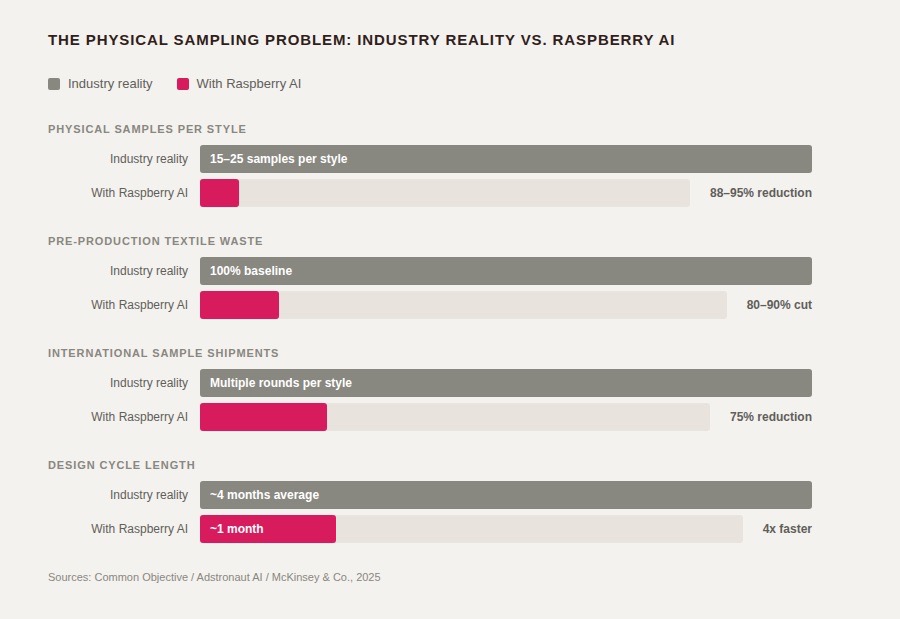
The results are measurable. Brands using Raspberry AI have seen 88 to 95% reductions in physical samples per style, 80 to 90% cuts in pre-production textile waste, and a 75% reduction in international sample shipments. We’ve seen teams report a 50% reduction in time spent across the design cycle. Design timelines that previously ran four months now routinely close in one.
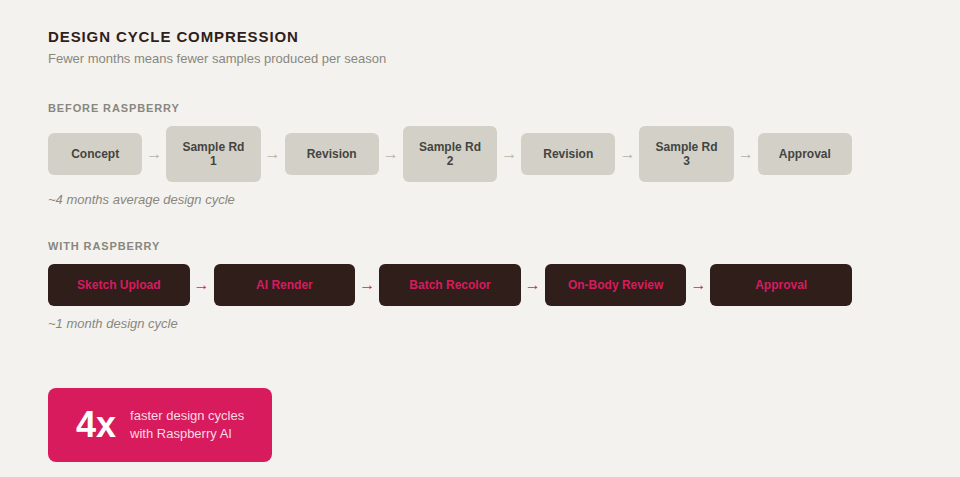
The accuracy driving these results is equally notable: Raspberry renders achieve 85 to 95% visual accuracy for standard apparel fabrics, handling texture, color, drape, and light behavior with enough fidelity that physical samples, when produced, now match the renders.
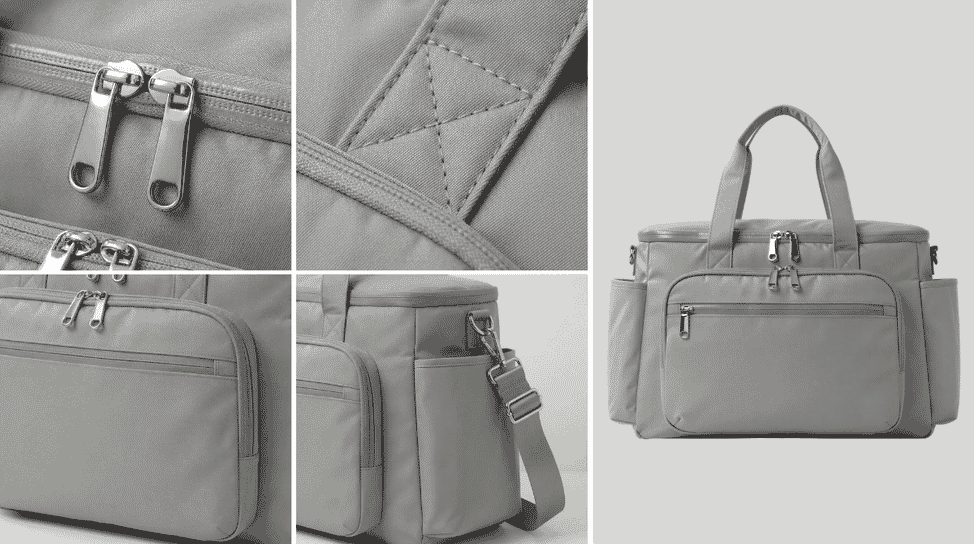
In one case, a manufactured bra matched its Raspberry 3D render exactly, including an adjustable-back design detail that 2D sketches had never been able to communicate to vendors.
"We're using 3D renders in tech packs to improve vendor understanding — it's reduced sample iterations by providing clearer visual specifications."
— Designer, Major basics manufacturer
Addressing Overproduction Before It Starts
The deeper sustainability argument also extends to the design decisions that drive overproduction downstream. When a brand can only afford to explore three to five fabric options per style, they're making production commitments under uncertainty. Styles that don't resonate become unsold inventory. Unsold inventory becomes landfill.
Raspberry changes that math. A brand that once tested three to five options per style can now evaluate 20 to 30 digitally, at no material cost. One customer logged over 2,000 digital generations in nine days all before a single physical sample was ordered. Another customer was able to resolve hardware and chain bag design decisions entirely in renders before making any physical commitment. The result is fewer samples and fewer wrong products entering production in the first place.
"Physical samples are now matching Raspberry renderings. Design cycles get compressed from 4 months to 1 month."
— R&D Team, global apparel brand
The Enablement Team Difference
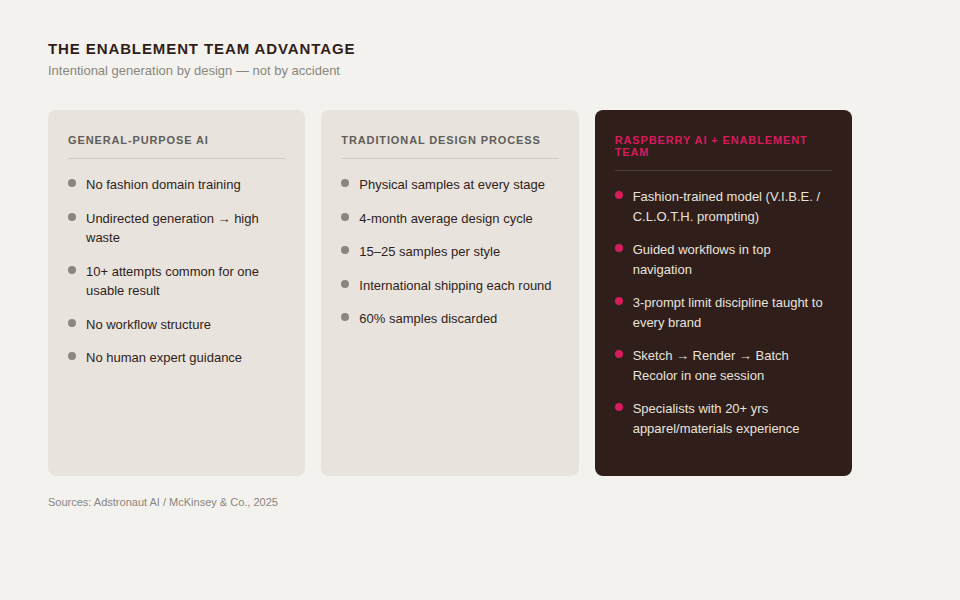
Not all AI generation is created equal. General-purpose AI tools have no fashion domain training, no workflow structure, and no discipline around generation efficiency which means more compute cycles per usable output, not fewer. Undirected AI use is its own form of waste.
Raspberry's Enablement Team is what closes that gap. Built from specialists with 20+ years of apparel and materials experience, the team teaches every brand a structured approach: the V.I.B.E. and C.L.O.T.H. prompting frameworks, a three-prompt discipline that maximizes first-pass accuracy, and a Sketch to Render to Batch Recolor workflow that produces usable outputs in a single session. For brands which previously needed up to 10 attempts per output, this coaching directly reduced both wasted compute and the friction that keeps teams from adopting AI at scale.
Compared to other alternative tools, which already delivers a 98% carbon reduction versus traditional photoshoots, Raspberry with guided Enablement workflows goes further, achieving the lowest energy per usable design output of any method in the comparison. Intentional generation means fewer total generations to reach a result.
The Business Case Reinforces the Environmental One
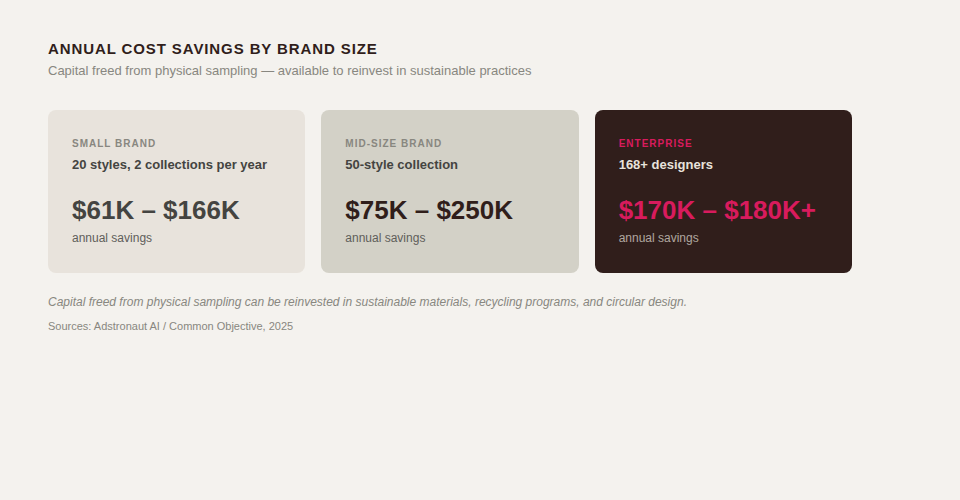
The cost savings from reducing physical sampling are substantial. Small brands running 20 styles across two collections per year save between $61,000 and $166,000 annually. Mid-size brands save $75,000 to $250,000. One enterprise customer with 168+ designers reported $170,000 to $180,000 or more in annual savings. That capital, freed from physical sampling, can be reinvested in sustainable materials, recycling programs, and circular design initiatives.
“We went from drowning in sample rounds to making confident decisions in a single session. The time savings alone changed how we plan our calendar."
— Creative Director, Contemporary womenswear brand
Fashion's Waste Crisis Has a Solvable Layer
The scale of the global textile waste problem can feel paralyzing. But pre-production sampling is a specific, bounded, and addressable contributor, one that Raspberry AI is designed to eliminate. Every render that replaces a physical sample is a garment that was never made, never shipped, and never discarded.
The brands doing this work are removing waste from their own design process now, one collection at a time.
Sources: UNEP, U.S. EPA, GAO 2024, Earth.org, Adobe Substance 3D, Adstronaut AI, Common Objective, McKinsey & Co., Environment+Energy Leader (Oct. 2025)
Heading 1
Heading 2
Heading 3
Heading 4
Heading 5
Heading 6
Lorem ipsum dolor sit amet, consectetur adipiscing elit, sed do eiusmod tempor incididunt ut labore et dolore magna aliqua. Ut enim ad minim veniam, quis nostrud exercitation ullamco laboris nisi ut aliquip ex ea commodo consequat. Duis aute irure dolor in reprehenderit in voluptate velit esse cillum dolore eu fugiat nulla pariatur.
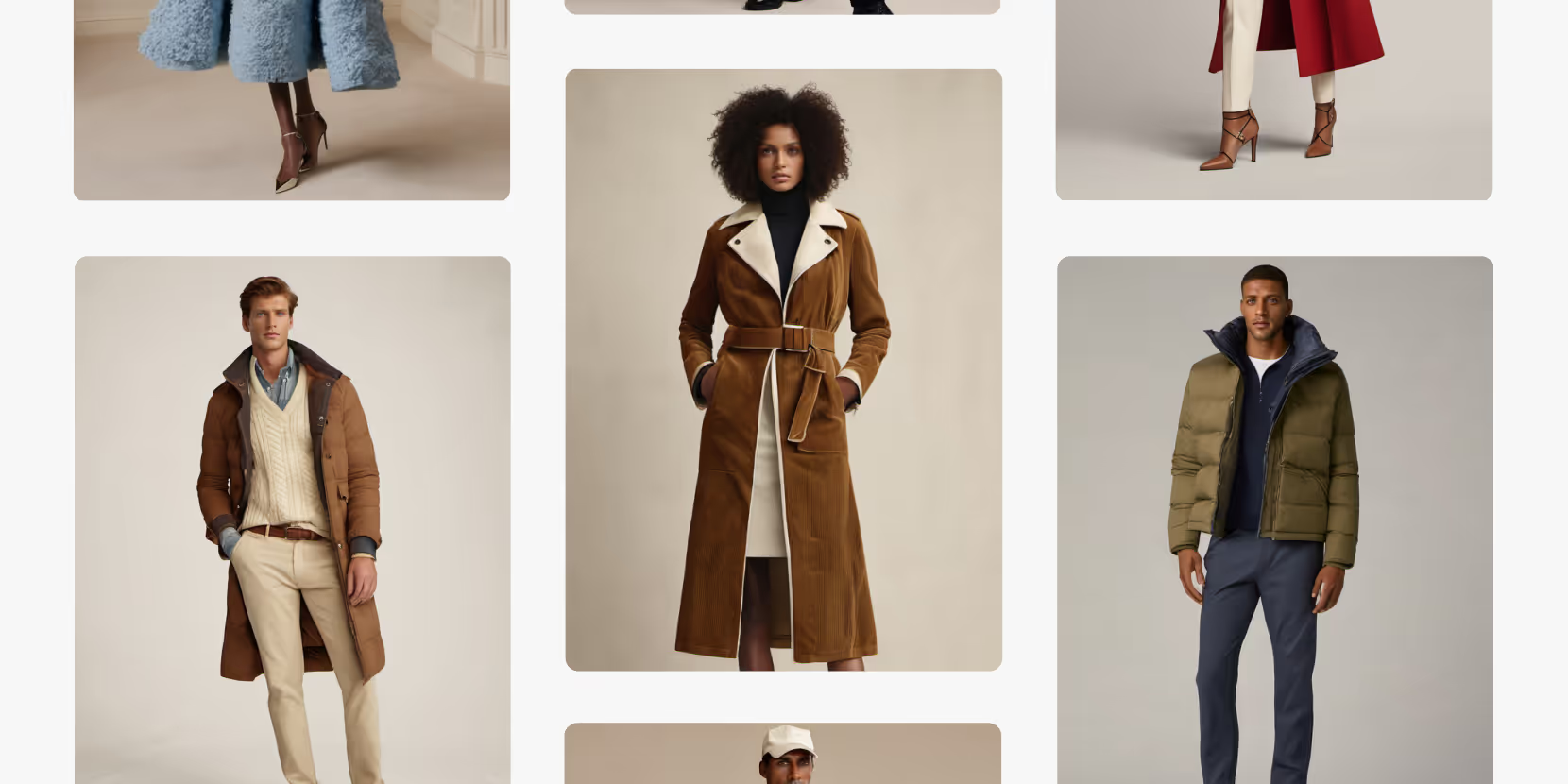
Merchandising and design now create together live in meetings—no more weeks of back and forth.”
[[VP of Merchandising] blog-quote-ttl]
[[$30M alternative eCommerce fashion retailer] blog-quote-subttl]
Quote Name Style
Ordered list
- Item 1
- Item 2
- Item 3
Unordered list
- Item A
- Item B
- Item C
Bold text
Emphasis
Superscript
Subscript

How to Drive AI Transformation Inside Creative Organizations
Learn the four patterns AI-forward design teams use to build real AI fluency from leadership culture and weekly rituals to embedding AI in reviews and closing the feedback loop.

Why Raspberry AI is the Only Creative AI on the CB Insights 2026 AI 100
CB Insights evaluated more than 40,000 AI companies worldwide. 100 made the cut. Raspberry AI is the only one built for creative teams — and the data behind the selection tells a clear story about where fashion AI is headed.
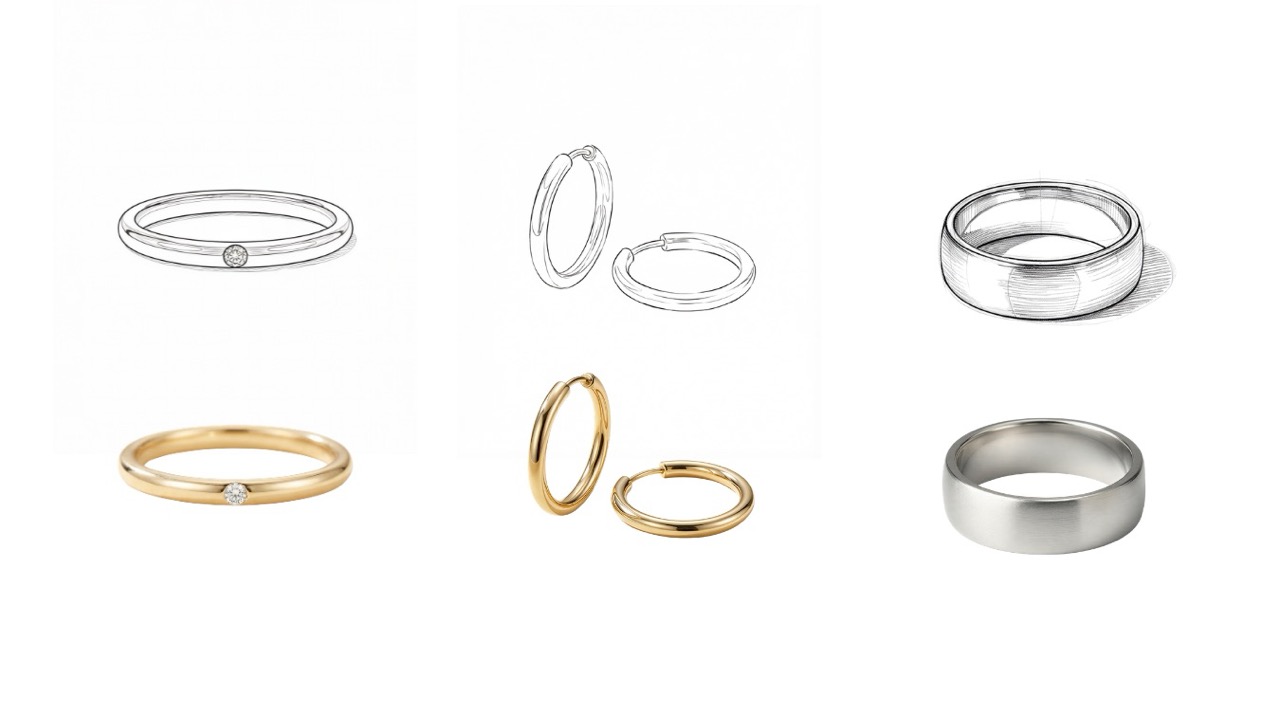
How to Render Accessories with Realism and Precision in Raspberry AI
Turn accessory sketches into photoreal renders with Raspberry AI. Get sharper details, on-model styling, Multi-View, and Animate tips.
Sign Up for Our Newsletter
We’re constantly enhancing our product. Stay informed with the latest updates.

Ready to Design Smarter, Faster, and at Scale?
Start creating stunning photorealistic designs in just a few clicks.